
Word games offer older adults an enjoyable way to practise language, stay mentally engaged, and connect with others. From crosswords to simple verbal activities, these games can easily become part of everyday life. Families using Caregiver Services in Vancouver can also incorporate word games into regular companionship activities, helping loved ones enjoy meaningful moments at home.
Table of Contents
Best Word Games for the Elderly: Quick Comparison Table
Choosing the right game depends on a senior’s interests, abilities, and preferred level of challenge. This table compares ten popular options.
| Word Game | Difficulty | Skills Practised | Best For | Easy Adaptation |
| Word Search | Easy–Medium | Visual attention, recognition | Independent play | Large-print grids |
| Crosswords | Easy–Hard | Vocabulary, recall | Solo or paired play | Familiar clues |
| Word Scramble | Easy–Medium | Spelling, recognition | Solo or paired play | Short words |
| Scrabble | Medium–Hard | Vocabulary, planning | Group activities | Play without scoring |
| Word Association | Easy | Verbal fluency | Conversation | Familiar topics |
| Finish the Phrase | Easy | Language recall | Beginners | Common sayings |
| Word Bingo | Easy | Listening, recognition | Groups | Large-print cards |
| Category Naming | Easy–Medium | Word retrieval | Verbal activities | Simple categories |
| Word Ladders | Medium | Spelling, flexible thinking | Puzzle enthusiasts | Three-letter words |
| Rhyming Games | Easy | Language, sound recognition | Social interaction | Familiar rhymes |
These difficulty ratings are general guidelines. Personal preferences, vision, hearing, and cognitive abilities should guide the final choice.

10 Best Word Games for the Elderly to Play at Home
These activities are easy to organize, require minimal equipment, and can be adapted for individual or group participation.
1. Word Search Puzzles
Players find hidden words within a grid of letters. Themes such as gardening, animals, or Canadian cities make puzzles more engaging.
Best for: Visual attention and independent entertainment.
Tip: Choose large-print puzzles with fewer words for beginners.
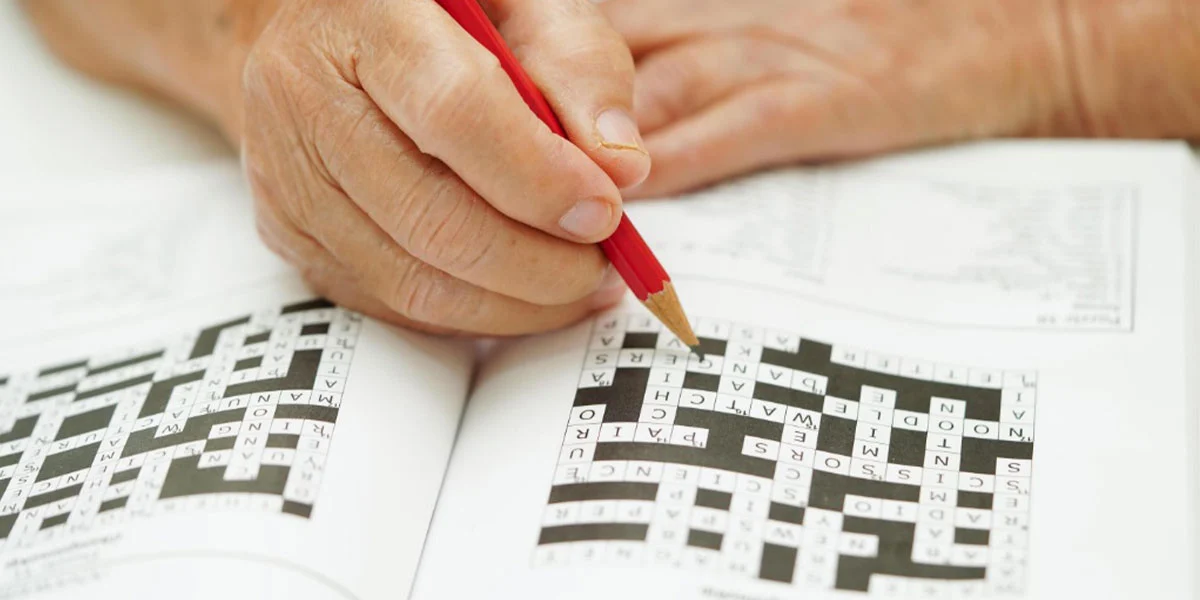
2. Crossword Puzzles
Crosswords involve solving clues to complete a word grid. Familiar topics make them particularly enjoyable for seniors who like trivia and reading.
Best for: Vocabulary recall and problem-solving.
Tip: Use shorter puzzles and solve difficult clues together.
3. Word Scramble
Players rearrange mixed-up letters to form meaningful words.
For example: PAELP → APPLE or AHCIR → CHAIR.
Best for: Spelling and word recognition.
Tip: Start with three- or four-letter words and provide hints when needed.
4. Scrabble
Scrabble involves creating words using letter tiles. It combines language skills with friendly social interaction.
Best for: Vocabulary, planning, and group entertainment.
Tip: Remove competitive scoring and allow players to build words cooperatively.
5. Word Association
One person says a word, and another responds with something related.
For example: Garden → Flowers → Spring.
Best for: Verbal communication and conversation.
Tip: Encourage personal associations without judging answers.
6. Finish the Phrase
Players complete familiar sayings or expressions.
For example: “Better late than…” → “Never.”
Best for: Familiar language recall and relaxed engagement.
Tip: Choose phrases connected to the person’s language and cultural background.
7. Word Bingo
Instead of numbers, bingo cards contain words. Players mark matching words as they are read aloud.
Best for: Listening, recognition, and group participation.
Tip: Use high-contrast cards and repeat words when necessary.
8. Category Naming Games
Players name objects belonging to a category, such as fruits, flowers, or Canadian cities.
Best for: Word retrieval and verbal fluency.
Tip: Avoid time limits and choose familiar subjects.
9. Word Ladders
Players change one letter at a time to create new words.
Example: CAT → COT → DOT → DOG.
Best for: Spelling and flexible thinking.
Tip: Start with simple three-letter words.
10. Rhyming Word Games
Players identify words with similar ending sounds, such as Light → Night or Rain → Train.
Best for: Language practice and social engagement.
Tip: Incorporate familiar songs or poetry to make the activity more enjoyable.
Free Word Games for the Elderly: Online and Printable Options
Free resources make word games accessible without expensive subscriptions. Families can choose digital puzzles or printable activities based on individual preferences.
Best Free Online Word Games for Seniors
Several websites provide convenient word puzzles:
- AARP Games: Crosswords, word searches, and other games, with free selections available.
- Puzzles.ca: Free daily word searches, crosswords, and word games.
- Arkadium: Online word searches, crosswords, and vocabulary puzzles.
Choose games with readable text, straightforward navigation, and minimal distractions. Check for advertising, optional purchases, or registration requirements.
Free Printable Word Games for the Elderly
Printable puzzles are ideal for seniors who prefer pen-and-paper activities or have limited access to technology.
Recommended resources:
- Puzzles.ca Large-Print Word Searches: Free printable puzzles designed for easier reading.
- Puzzles.ca Word Search Collection: Themed puzzles with solutions.
- Alzheimer Society of Canada: Guidance on mentally engaging activities and dementia-friendly participation.
For comfortable reading, select large fonts, clear spacing, and high-contrast designs. Keep printed puzzles organized by difficulty and interest.
Easy Word Games for the Elderly With Different Ability Levels
The most enjoyable games match a person’s current abilities without creating unnecessary pressure.
Simple Word Games for Beginners
For older adults unfamiliar with puzzles, start with activities requiring little preparation:
- Word Association: Connect familiar words through conversation.
- Finish the Phrase: Complete common sayings.
- Category Naming: List familiar foods, animals, or places.
Short sessions of five to ten minutes can be a comfortable starting point, although there is no required duration. Allow extra response time and follow the person’s preferences.
Word Games for the Elderly With Dementia
People living with dementia may enjoy word games when activities are adapted to their individual abilities.
For early-stage dementia, familiar crosswords or simple word searches may remain enjoyable. For those experiencing greater communication difficulties, spoken games, favourite sayings, or familiar song lyrics may be easier.
| Individual Need | Suggested Game | Adaptation |
| Mild word-recall difficulty | Word Association | Offer gentle hints |
| Difficulty following instructions | Finish the Phrase | One prompt at a time |
| Reduced attention | Word Search | Smaller grids |
| Difficulty reading | Rhyming Games | Play verbally |
| Frustration with challenging tasks | Familiar sayings | No scoring or corrections |
The goal should always be enjoyment rather than testing memory. Caregivers can explore additional activities for dementia patients to support meaningful engagement.
Stop or change activities if someone becomes tired, confused, or frustrated.
Benefits of Word Games for Seniors: Memory, Focus, and Social Connection
Word games offer several opportunities for meaningful mental and social engagement:
- Memory and language: Crosswords and familiar expressions encourage word retrieval.
- Focus: Word searches and letter puzzles involve sustained attention.
- Communication: Verbal games encourage conversation and language use.
- Social connection: Group activities provide opportunities for companionship.
- Enjoyment: Completing puzzles can create a satisfying sense of achievement.
Although word games engage cognitive skills, they have not been proven to prevent or reverse dementia. The Alzheimer Society of Canada encourages mentally stimulating activities as part of a broader brain-healthy lifestyle.
At Trust Hands, we believe meaningful companionship and enjoyable activities contribute to a more fulfilling daily routine. Whether sharing a crossword or enjoying a simple word game together, the greatest benefit is often the connection and happiness these moments create.